 TRANSIT
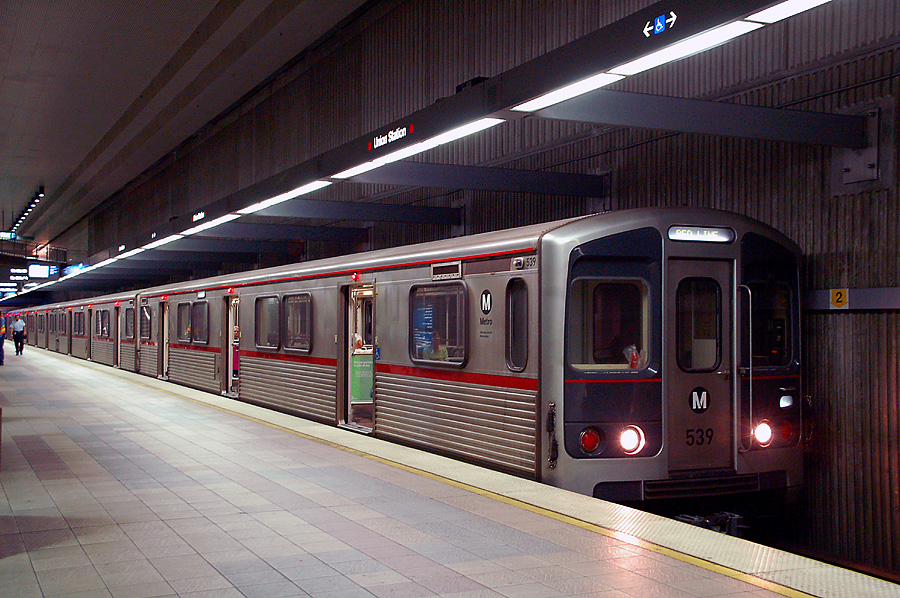
Los Angeles's first subway, the Metro B Line (Red Line), was the product of more than two decades of institutional planning, political conflict, federal negotiation, and engineering challenge. At the center of this story is the Los Angeles County Transportation Commission (LACTC), created by state legislation in 1976 to plan and fund transit while the Southern California Rapid Transit District (SCRTD) continued operating buses. This division of responsibility—a funding commission and an operating district as separate agencies—shaped every aspect of the Red Line's development and ultimately led to the 1993 merger that created LACMTA. This document preserves the primary institutional record of that history.
The LACTC: Formation and Mandate
The Los Angeles County Transportation Commission was established by California Senate Bill 325 in 1976. Its creation reflected two converging pressures: the availability of federal Urban Mass Transportation Administration (UMTA) capital grants that required a single regional agency to program funds; and growing recognition that SCRTD, as an operating agency with a large workforce and day-to-day service obligations, was structurally unsuited to the long-term capital planning required for rail transit.
LACTC's eleven-member board included representatives from Los Angeles County, the City of Los Angeles, and other incorporated cities. Its primary mandate was to develop and implement a long-range transportation plan for the county—a mandate it discharged through a series of planning studies in the late 1970s that culminated in the 1980 Long Range Plan and the concurrent Proposition A ballot measure.
Proposition A (1980), approved by 54% of Los Angeles County voters, created a half-cent sales tax dedicated to transit. It provided the local funding foundation without which federal UMTA grants would have been unavailable for rail construction. The Transportation 101 guide describes the full funding architecture in which Proposition A played the foundational role.
The Wilshire Subway: Planning the Alignment
From the earliest LACTC planning studies, the Wilshire Boulevard corridor was identified as the priority rail investment. Wilshire's characteristics—a four-mile employment density rivaling Manhattan on the stretch from downtown to Westwood, a linear alignment with consistent east-west travel demand, and a existing SCRTD Wilshire bus route carrying 50,000+ daily riders—made it the clearest case for rapid transit investment in the county.
The alignment debates of the late 1970s and early 1980s focused on the question of technology and route. Surface light rail on Wilshire was rejected on grounds of operating speed and the boulevard's high pedestrian and vehicle volumes. A subway was selected, but the western terminus and phasing were contested. The initial focus fell on a downtown-to-Westlake segment as Phase 1, with subsequent extensions westward under Wilshire.
The downtown terminal decision was also complicated. A Union Station terminus was preferred by regional planners for its connection to Amtrak, Metrolink, and future rail extensions, but required tunneling through the complex geology and infrastructure of downtown Los Angeles. The final alignment, beginning at Union Station and traveling west under First, Second, and Third Streets before turning onto Wilshire, was confirmed in LACTC's 1983 Final Environmental Impact Report.
CEQA, Litigation, and the Methane Zone
The Red Line's environmental review process was among the most contested in California transit history. LACTC filed its initial Environmental Impact Report in 1983, was challenged in litigation, and required to circulate a supplemental EIR addressing previously identified deficiencies. The litigation added approximately two years to the project schedule and established legal precedents regarding the scope of alternatives analysis required in CEQA documents for major transportation projects.
A separate environmental constraint—one with direct safety implications—emerged from the discovery of methane and hydrogen sulfide gas in the soils along the proposed Wilshire alignment west of La Brea Avenue. State legislation enacted in the late 1980s (colloquially known as the "subway to the sea" ban) prohibited the use of Proposition A funds for subway construction under Wilshire Boulevard west of Western Avenue in response to safety concerns about tunneling through the methane zone.
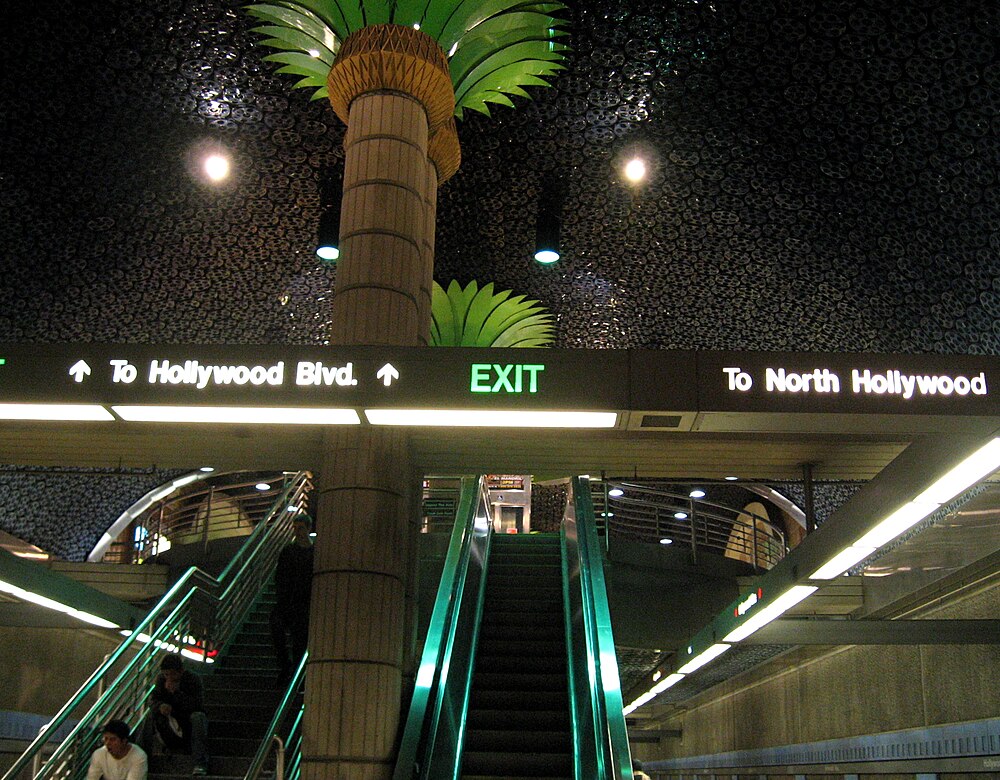
This restriction fundamentally redirected the Red Line's Phase 2 and Phase 3 extensions. Rather than continuing westward under Wilshire toward Beverly Hills and Westwood as originally envisioned, the line was extended north from Wilshire/Vermont into Hollywood and then to North Hollywood. The Wilshire extension would be deferred until different funding sources could be identified—ultimately Measure M would fund the Purple Line (D Line) Extension that is now nearing completion in the 2020s.
Construction Phases: 1986–2000
Construction on the Metro B Line began in 1986 with the initial segment from Union Station to MacArthur Park/Westlake. The project was managed jointly by LACTC (which held the federal construction grant and managed the construction contracts) and SCRTD (which provided operational input and would eventually operate the line).
| Phase | Segment | Stations | Construction Start | Revenue Service | Federal Grant (UMTA/FTA) |
|---|---|---|---|---|---|
| Phase 1 | Union Station → Wilshire/Alvarado (MacArthur Park) | 5 | 1986 | Jan. 30, 1993 | $1.1B (UMTA) |
| Phase 2A | Wilshire/Alvarado → Wilshire/Western | 3 | 1993 | Jul. 12, 1996 | FTA CIG New Starts |
| Phase 2B | Wilshire/Western → Hollywood/Vine | 3 | 1995 | Jun. 12, 1999 | FTA CIG New Starts |
| Phase 2C | Hollywood/Vine → North Hollywood | 4 | 1997 | Jun. 24, 2000 | FTA CIG New Starts |
Technical Specifications and Rolling Stock
The Metro B Line was constructed to heavy rail standards: third-rail electrification at 750 volts DC, full grade separation with no at-grade crossings, standard gauge (4 ft 8.5 in) track, and a maximum design speed of 70 mph. Station platform lengths accommodate 6-car trains.
The original rolling stock order—Breda Series 1 and 2 rail cars—was procured from Breda Costruzioni Ferroviarie of Italy. The Breda cars' initial delivery was troubled by door mechanism failures and electrical system defects that required extensive warranty work and delayed the full complement of cars entering service. This procurement experience directly influenced LACMTA's subsequent use of more rigorous contract performance specifications for rolling stock.
The current fleet is composed of Kinkisharyo Series 6 rail cars, a newer generation that also serves the Metro D Line (Purple). The Series 6 cars entered service beginning in 2012, replacing the aging Breda fleet.
The LACTC-SCRTD Merger: Birth of LACMTA (1993)
By the early 1990s, the structural tension between LACTC (planning and funding) and SCRTD (operations) had become a persistent operational and governance problem. Decisions about rail station design, bus-rail transfer facilities, and service integration required coordination between two separate bureaucracies with different cultures, staffing, and accountability structures.
California Assembly Bill 1246 (1992), authored by Assemblymember Richard Katz, merged LACTC and SCRTD into the Los Angeles County Metropolitan Transportation Authority (LACMTA), effective April 1, 1993—the same year the Red Line's first segment opened to the public. The merger created a unified agency with responsibility for both planning/funding and operations, the model that has governed Los Angeles transit ever since.
The institutional history described here provides essential context for understanding the current funding structure and the decisions that shaped subsequent projects including the Metro A Line (Blue Line), Expo Line, and the G Line (Orange Line) BRT corridor.